LET THEM: 3 Chapters in the book that spoke to me …

I can see why people like this book, but I did not get as much from it as I’d been told I might 😃

By Lauren Beversdorf

Like so many people, I picked up Let Them by Mel Robbins with curiosity. While the entire book didn’t land for me, three chapters—5, 6, and 14—hit me straight in the heart when thinking about myself as well as the people I love most. Sometimes all it takes is a few pages to shift your mindset, and these chapters gave me that nudge I didn’t know I needed.


💡 Chapter 5: “Let Them Judge You”

This chapter reads like a permission slip to live unfiltered. Mel Robbins asks: What if people judge you… and you let them?

Rather than shrinking from criticism, she reminds us that judgment is a reflection of the judge, not the judged.

“You can’t be free if you’re trying to manage everyone’s perception of you.”
Mel Robbins, Let Them

I realized how much energy I sometimes waste trying to be understood, liked, or validated. Letting people judge means letting go of their power over my peace and the stories they tell versus the good one I know to be TRUE.

🎥 Watch this video:
Stop Caring What They Think – Mel Robbins (YouTube)
“If someone judges you, that is their business, not yours.”


🌿 Chapter 6: “Let Them Talk Behind Your Back”

This chapter was a big exhale for me. I’ve gotten pretty good at this in the last couple years…because I just do not care what people think anymore…when I know the truth. I am a good person, I try my best, I have good intention in just about everything I do. Mel flips the narrative: if people are talking about you behind your back, they’re behind you for a reason.

“Let them talk. You have more important places to be.”

It’s about peaceful detachment. This chapter helped me unhook from people’s stories about me and return to my own. I’ve written a pretty good one.

💬 Lauren’s Take:
I used to believe that being liked equaled being safe. This chapter challenged that—and helped me see that safety comes from within.


🗝️ Chapter 14: “Let Them Leave”

This chapter was the mic drop. Whether it’s friendships, jobs, or relationships we’ve outgrown, this one reminds us: Let them leave.

“Every exit creates space. What will you fill it with?”

It helped me grieve and release long-held attachments. Loss doesn’t mean failure—it can mean freedom.

🎧 Listen to the podcast:
The Secret to Letting Go – The Mel Robbins Podcast (Spotify)


✨ Final Thoughts

Most self-help books preach more than they land. Let Them didn’t speak to every part of me—but Chapters 5, 6, and 14? They validated some things I know to be true, I already have in practice or gave me the validation I needed to continue the work.

If you find yourself stuck in people-pleasing, hurt by gossip, or afraid to let go… maybe you don’t need the whole book. Maybe just these three chapters are enough.


🛒 Want to read it yourself?

Unlocking School Culture

Lessons from The Culture Code by Daniel Coyle

Daniel Coyle’s The Culture Code reveals the hidden dynamics behind successful teams and cultures. While the book draws from elite organizations like Navy SEALs and Pixar, its lessons are surprisingly applicable to schools. For educators and school leaders, Coyle’s insights offer a roadmap to foster trust, collaboration, and purpose within educational communities.


🧠 The Three Core Skills of Strong Cultures

Coyle identifies three essential skills that underpin thriving group cultures:

  1. Build Safety
    Psychological safety is foundational. In schools, this means creating environments where teachers and students feel secure to express ideas and take risks without fear of negative consequences. Simple actions like active listening, inclusive language, and consistent support can cultivate this safety .
  2. Share Vulnerability
    Contrary to the belief that trust precedes vulnerability, Coyle suggests that vulnerability fosters trust. When school leaders and educators openly acknowledge challenges and uncertainties, it encourages a culture of mutual support and continuous learning .
  3. Establish Purpose
    A shared sense of purpose aligns efforts and motivates teams. In educational settings, this involves articulating clear goals and values that resonate with both staff and students, guiding daily actions and long-term strategies .

🏫 Practical Applications in Schools

Implementing these principles can transform school culture:≈

  • Foster Open Communication: Encourage regular, honest dialogues among staff to build trust and collaboration.
  • Model Vulnerability: Leaders sharing their own learning experiences can create a safe space for others to do the same.
  • Define and Reinforce Purpose: Consistently communicate the school’s mission and values to align and inspire the community.

For a deeper exploration of how these concepts apply to educational leadership, consider reading this insightful article:

Kat Howard


🎥 Further Insights

For a visual summary of Coyle’s ideas, watch this brief video:


📚 Explore the Book

Interested in delving deeper? You can find The Culture Code here:

Amazon


By embracing these principles, educators and school leaders can cultivate environments where collaboration thrives, trust is foundational, and a shared purpose drives success.Kat Howard


Teacher Well-BEing

Rethinking Teacher Wellbeing: Lessons from Amy Green’s Teacher Wellbeing

In her insightful book Teacher Wellbeing: A Real Conversation for Teachers and Leaders, Amy Green challenges the traditional, often superficial approaches to educator wellness. She emphasizes that true wellbeing is not about quick fixes but about creating sustainable, systemic change within school cultures.Target+6shermans.com+6The Educator+6LinkedIn

Key Takeaways:

1. Wellbeing is a Collective Responsibility

Green asserts that teacher wellbeing isn’t solely the individual’s responsibility. Instead, it’s a shared commitment among educators, leaders, and the entire school community. This collective approach ensures that wellbeing is woven into the fabric of the school’s culture .

2. Move Beyond Band-Aid Solutions

Temporary fixes like occasional wellness days or generic stress-relief activities don’t address the root causes of teacher burnout. Green advocates for long-term, sustainable strategies that consider the unique needs of each educator .Tārai Kura

3. Understand the Dimensions of Wellbeing

Drawing from psychological research, Green highlights six dimensions of wellbeing: self-acceptance, positive relationships, autonomy, environmental mastery, purpose in life, and personal growth. Recognizing and nurturing these areas can lead to a more fulfilled teaching experience .LinkedIn

4. Reflect on School Systems and Structures

School leaders are encouraged to evaluate existing systems and structures. Are they supporting or hindering teacher wellbeing? From planning schedules to behavior management policies, every aspect should be scrutinized for its impact on educators’ health and productivity .The Wellness Strategy Pty Ltd+4Tārai Kura+4The Educator+4

Practical Strategies for Educators:

  • Set Boundaries: Establish clear work-life boundaries to prevent burnout.
  • Practice Self-Compassion: Acknowledge your efforts and be kind to yourself during challenging times.
  • Foster Positive Relationships: Build supportive networks with colleagues to share experiences and solutions.
  • Seek Purpose: Reconnect with the reasons you chose the teaching profession to find renewed motivation.The Wellness Strategy Pty Ltd

Resources to Explore:

By embracing these principles and strategies, educators can work towards a more balanced and fulfilling professional life.


Favicon
Favicon
Favicon
Favicon
Favicon

Sources

How did you remain CALM?

I do not watch the news daily, but rather watch Ellen daily to keep up to date on what is happening in the world. I watched this interview when it aired in October 2018 and just rewatched it again. Between about the 2 minute to 4 minute mark in the video, Ellen asks them how they all remained CALM. Their answer is so inspiring and important.

I cannot imagine myself remaining calm if I were trapped in a cave with no access to food and very little water for 10 days, but this team did exactly that. Their answer reminds me of my new goals and new aspirations bringing mindfulness to schools and in particular, to teachers first. Teaching can be a very stressful and emotionally draining profession, but the teachers at my school remain in the profession because of the purpose we serve, we love working with children and the connections we form with each other and our students.

At my school this year, we are using the CALM app to remain calm and practice our own version of self care to be the bring the best versions of ourselves to our students. Calm has a calm school initiative and their app is free for educators if you simply apply here. We have been so grateful to have access to Calm’s daily mindfulness meditaions, as well as their music, sleep stories and more. There are specific mindfulness activities geared toward specific age groups of children as well. I do not have much experience with those yet, as my school is focused on our teacher’s well-being first. Studies show that if teachers take time to stop, breathe and think, their students will blossom. So that is where we are now!

Another incredible app, that is also a website with a full curriculum for FREE for schools and teachers if you simply apply here is actually called STOP, BREATHE, THINK. There is a version of their app for adults as well as a version for children. So far, I have used the adult version and the children’s version minimally, but has been so powerful when I tried it because it is directly correlated to the brain research behind mindfulness (from Hrvard) and social emotional learning (from Berkley). If any human being can stop, breathe, and simply name their emotion, feeling, or state of mind, that person can operate from a more aware and mindful (less reactive) responsive version of themselves.

The research on mindfulness in education continues to grow and evolve in support of what it does for our stress levels, our resilence, our overall health, our attention, our relationships, our brains and our compassion for ourselves and others. Here’s Dr. Dan Siegel (one of the leading reserachers and Clinical Professor of psychiatry at UCLA) below talking about mindful parenting, as well as understanding self regulation. He’s also the creator of the hand model of the brain.

Can you TAKE 5 just for YOU? #mindfulness #mindfulmeditation #justbreathe

A year from now you’ll be so glad you started TODAY…

What is one small thing you can start TODAY that your future self will thank you for? As Reneé Stephens, PhD puts it, “There is momentum from small steps that makes the next ones that much easier.” So start today! What is one SMALL thing you can do?

The key word is SMALL…so small and doable that you start building momentum toward whatever your positive outcome or whatever your intention or change is. Maybe you set resolutions, maybe you set goals, maybe you’ve achieved them, maybe not…

None of that matters! What does matter is that you choose something that your future self will thank you for?

For me, that small thing has been to commit to 5 MINUTES (that’s it!) of mindful meditation per day. I have dabbled and played with meditation since 2010, but I was going too big and forcing myself to sit still for longer amounts of time that I wasn’t ready to commit to…YET. Enter my TAKE 5.

Does this video remind you or help you to TAKE 5 for YOURSELF?

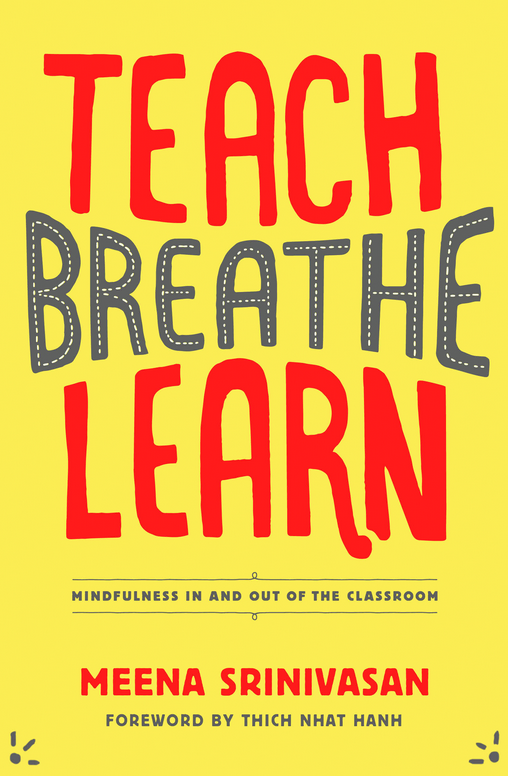
In a graduate course I completed this past summer, Meena Srinivasan wrote about a TAKE 5 (so simple) in her book Teach, Breathe, Learn.

Screen Shot 2019-01-30 at 8.56.41 PM.png

I thought, okay, 5 minutes just to sit and breathe. I can commit to that! She suggested a free app called Insight Timer. Love it. It gave me my small start that stuck!

She also wrote about “greeting your day” with an intention as soon as you wake up. So I started small…my intention daily is always THE SAME: Breathe, Believe, Receive.

I began in June 2018 and I am still going strong. We’ve even grown a group of teachers at my school to practice mindfulness each morning together as we arrive to the building!

We now use the Calm App to TAKE 5 each day because Calm offers a Calm Schools Initiative. Their app is free for schools if you apply.  My classroom door is open from 8:20-8:30 each day and teachers come in to TAKE 5 with me when they can.

Since I started SMALL, I have now grown my practice to 10, sometimes 20 minutes a day! What will help you TAKE 5? The teachers at my school and I reward ourselves at times with these… 🙂  Because WHY NOT?  screen shot 2019-01-30 at 7.11.47 pm

screen shot 2019-01-30 at 8.51.34 pm

take 5


And when you are feeling snarky, cynical, salty or just need a good ADULT laugh…check out this meditation <———– spoiler alert…filled with hilarious swears in all the right spot.

ProjectHappiness and YOGA

I don’t know what I’d do without either of these things in my life. Thank you Project Happiness for your daily doses of wisdom, love and truth. Thank you yoga for helping me find me.

Subscribe to BOTH of you can.

CHANGE


Steve Jobs is quoted in short above…the crazy ones, he seemed to be one of the change makers.  I know some others and hope and pray their well intentioned changes are realized.  The choice is the first step, the chance is the second and the hopeful third is the CHANGE.  🙂


quote-we-believe-people-with-passion-can-change-the-world-for-the-better-that-s-what-we-believe-steve-jobs-105-97-32

BALANCE-CAN YOU find it? DO you HAVE it?

I am so happy to have met Rob Bruce and all others involved with Be The Change Chicago!  He and I have the same intentions with our websites, postings and daily life interactions.  Here is their website.  I feel honored to be a teeny tiny part of their most recent video.

Check it out above and follow them on Instagram, Facebook and get in touch with Rob rob@bethechangechicago.org

if you want to know more or be involved.

THEIR MISSION:

Mission
Be The Change Chicago’s main focus is to advocate for Chicagoland organizations through events and fundraising. We join together with professionals and our community to create social awareness and positivity. By being a catalyst for change, we promote various causes and empower others.